Reconstitution and dose maths
Tirzepatide reconstitution calculator
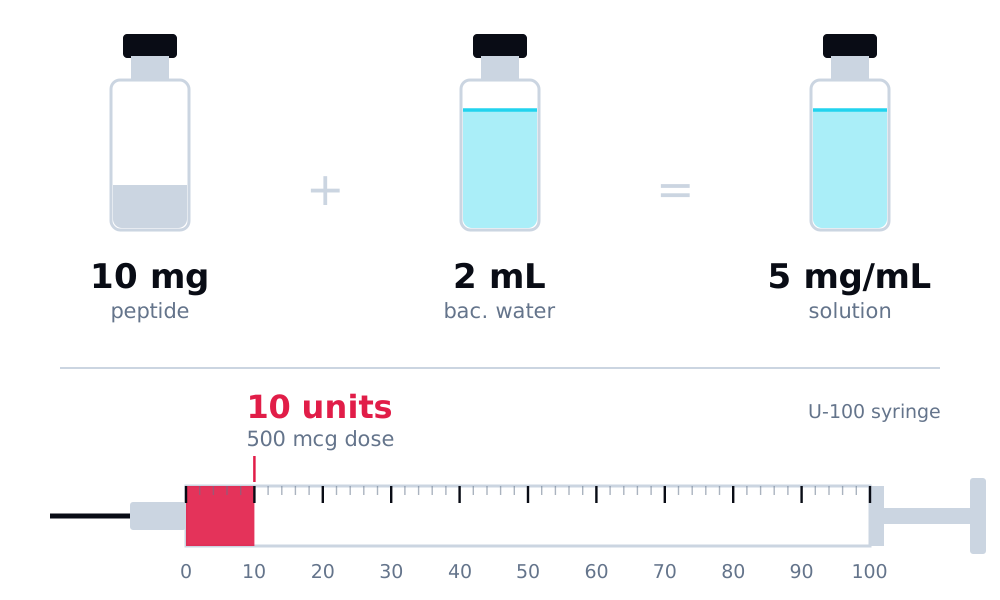
A 10 mg vial with 2 mL of bacteriostatic water gives 5 mg/mL, so a 2.5 mg dose is 0.5 mL: 50 units on a U-100 insulin syringe. Set your own vial, water and dose below and read the draw off the syringe.
Updated 30 August 2026. Ledger figures captured 30 August 2026.
The arithmetic, shown
- 10 mg in the vial ÷ 2 mL of water = 5.00 mg/mL
- 2.500 mg per dose ÷ 5.00 mg/mL = 0.500 mL
- 0.500 mL × 100 = 50 units on a U-100 syringe
Your vial
Vial size (mg)
Bacteriostatic water added (mL)
What the calculator is doing
Milligrams in the vial, units on the barrel.
Common draws
The usual vials, worked out.
Tirzepatide is dosed in whole milligrams, 2.5 to 15 mg in the titration most research references use, and research vials run 10 to 30 mg. That combination keeps most draws in the readable middle of a U-100 syringe, provided the water volume is chosen to match.
| Vial | Water added | Concentration | Dose | Draw to | Doses in the vial |
|---|---|---|---|---|---|
| 10 mg | 1 mL | 10.00 mg/mL | 2.5 mg | 25 units | 4 |
| 10 mg | 2 mL | 5.00 mg/mL | 2.5 mg | 50 units | 4 |
| 15 mg | 2 mL | 7.50 mg/mL | 5 mg | 67 units | 3 |
| 20 mg | 2 mL | 10.00 mg/mL | 5 mg | 50 units | 4 |
| 20 mg | 2 mL | 10.00 mg/mL | 7.5 mg | 75 units | 2 |
| 30 mg | 2 mL | 15.00 mg/mL | 10 mg | 67 units | 3 |
Every row is the same three steps the calculator shows: vial ÷ water = mg/mL, dose ÷ mg/mL = volume, volume × 100 = units. The doses column is how many full doses the labelled vial mass holds, rounded down.
Vials, not pens
The mg on the vial is not a dose.
Pharmacy tirzepatide comes in single-dose pens labelled by dose: 2.5, 5, 7.5 mg and up. Research vials are labelled by total content, and a 20 mg vial at 2.5 mg per dose holds 8 doses. People coming from pens read the vial label as a dose and overdraw by a factor of four or more, which is the most expensive mistake this page can prevent.
The second trap is the syringe. Insulin syringes measure volume, not mass, so "how many units is 5 mg" has no answer until you fix the concentration. The same 5 mg dose is 50 units at 10 mg/mL and a full syringe at 5 mg/mL. When a draw does not fit in one syringe, the fix is less water at reconstitution time, not a second guess at the needle.
The public record
Tirzepatide in the open archive.
of the 201 tests in Janoshik's public archive name tirzepatide in the listing. Captured 30 August 2026.
Of those 43 listings, 19 claim a 20 mg vial, 11 claim 30 mg, and the rest run from 10 up to a single claimed 120 mg. So the 20 mg vial is the size the wholesale side actually sends for testing, which is why it anchors the table above.
The listings themselves are worth reading as a caution. Several spell the compound "Tizepatide" and carry a WhatsApp number in the product name. These are manufacturer and reseller submissions, not retail brands, and a public report proves one batch was tested once. If a seller handed you a report for your vial, verify it against the lab rather than trusting the PDF, and read the report ledger for what a listing does and does not prove.
Questions
Tirzepatide dose maths, asked directly.
How many units is 2.5 mg of tirzepatide?+
It depends on the concentration, which is why the question has no single answer. At 5 mg/mL, which is what a 10 mg vial gives you with 2 mL of bacteriostatic water, 2.5 mg is 0.5 mL: 50 units on a U-100 insulin syringe. At 10 mg/mL the same dose is 25 units.
How much bacteriostatic water should I add to a 10 mg tirzepatide vial?+
There is no required amount; water changes the concentration, never the dose. 2 mL is a common choice because it gives 5 mg/mL, which keeps doses from 2.5 to 5 mg between 50 and 100 units, a range that is easy to read on a U-100 syringe.
Why is my vial 20 mg when tirzepatide pens go up to 15 mg?+
A pen holds a single dose; a research vial is a multi-dose container. A 20 mg vial at 2.5 mg per dose holds 8 doses, and at 5 mg it holds 4. The vial mass says nothing about what a single dose should be.
Does this calculator know what is actually in the vial?+
No. It computes from the label mass you select. Whether the vial really holds that mass is a testing question, which is what a lab report answers. If your vial came with a Janoshik report, check it before you dose from it.
Other compounds
Same arithmetic, different defaults.
Retatrutide calculator
The most tested compound in the public archive. Vials 5 to 30 mg, doses in whole milligrams.
Semaglutide calculator
The smallest doses of the GLP-1s: 0.25 to 2.4 mg, where a draw can shrink below readability.
BPC-157 calculator
Dosed in micrograms, which is exactly where the thousand-fold unit mistake lives.
GHK-Cu calculator
50 and 100 mg vials flip the usual problem: the risk is a draw too small to measure.
MOTS-c calculator
One vial size dominates the public record, and one public assay shows why labels are claims.
All compounds
The same calculator with the full compound picker, TB-500 included.
Research use only
MechPeptides sells nothing. Tirzepatide is named on this page so the arithmetic has a label on it. Pharmaceutical tirzepatide is a prescription drug; research-grade vials are not that product, are not FDA approved, and are not dietary supplements. Nothing on this site is medical advice or a recommended protocol.
The calculator performs arithmetic on numbers you enter. It converts a vial mass and a diluent volume into a concentration, then into a volume and a U-100 syringe reading. It does not know your compound, it does not recommend a dose, and its slider bounds are display ranges rather than guidance. Confirm every calculation independently before acting on it.