Reconstitution and dose maths
Semaglutide reconstitution calculator
A 5 mg vial with 2 mL of bacteriostatic water gives 2.5 mg/mL, so a 0.25 mg dose is 0.1 mL: 10 units on a U-100 insulin syringe. Semaglutide doses are the smallest of the GLP-1s, so the water volume decides whether your draw is readable at all.
Updated 30 August 2026. Ledger figures captured 30 August 2026.
The arithmetic, shown
- 5 mg in the vial ÷ 2 mL of water = 2.50 mg/mL
- 0.250 mg per dose ÷ 2.50 mg/mL = 0.100 mL
- 0.100 mL × 100 = 10 units on a U-100 syringe
Your vial
Vial size (mg)
Bacteriostatic water added (mL)
What the calculator is doing
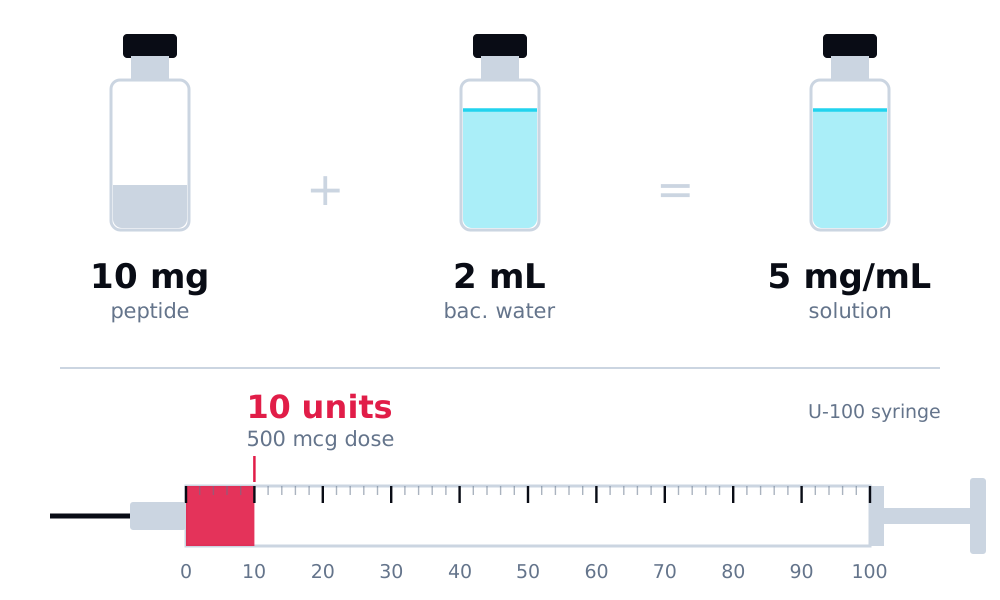
Milligrams in the vial, units on the barrel.
Common draws
The usual vials, worked out.
Semaglutide doses run 0.25 to 2.4 mg, the ladder printed on the pharmacy pens. Research vials are 2 to 10 mg, so a single vial holds many doses and the draws sit at the small end of the syringe. Every row below fits a standard U-100 syringe.
| Vial | Water added | Concentration | Dose | Draw to | Doses in the vial |
|---|---|---|---|---|---|
| 2 mg | 2 mL | 1.00 mg/mL | 250 mcg | 25 units | 8 |
| 5 mg | 2 mL | 2.50 mg/mL | 250 mcg | 10 units | 20 |
| 5 mg | 2 mL | 2.50 mg/mL | 500 mcg | 20 units | 10 |
| 5 mg | 2 mL | 2.50 mg/mL | 1 mg | 40 units | 5 |
| 10 mg | 2 mL | 5.00 mg/mL | 1 mg | 20 units | 10 |
| 10 mg | 2 mL | 5.00 mg/mL | 2.4 mg | 48 units | 4 |
Each row is the calculator's three steps in print: vial ÷ water = mg/mL, dose ÷ mg/mL = volume, volume × 100 = units on a U-100 syringe. Doses in the vial is the labelled mass divided by the dose, rounded down.
The small-draw problem
Here, more water is the safe direction.
With most peptides the worry is a draw too large for the syringe. Semaglutide has the opposite problem. Reconstitute a 10 mg vial with 1 mL and you get 10 mg/mL, which turns a 0.25 mg starting dose into 2.5 units: a sliver between two tick marks that you cannot draw twice the same way. A measurement error of half a unit is 20% of the dose at that concentration.
Dilute instead. The same vial with 2 mL gives 5 mg/mL and a 5-unit draw; a 5 mg vial with 2 mL gives 2.5 mg/mL and a 10-unit draw. The calculator flags any result under 3 units for exactly this reason. Sub-milligram doses also invite decimal slips: 0.25 mg is 250 mcg, and the dose slider on this page works in the same milligram steps the pharmacy ladder uses, so there is no unit conversion left to fumble.
The public record
Nearly absent from the open archive.
of the 201 tests in Janoshik's public archive name semaglutide in the listing. Captured 30 August 2026.
Three listings, against 68 for retatrutide and 43 for tirzepatide. The likely reason is boring: semaglutide mostly reaches people as a finished pharmacy product, so the wholesale channel that pays for public testing trades mainly in the newer vial-only compounds. One of the three is a blend with cagrilintide.
Read nothing about your own vial into that absence, in either direction. If it came with a lab report, verify the report against the lab; the report ledger explains what a public listing proves and what it does not.
Questions
Semaglutide dose maths, asked directly.
How many units is 0.25 mg of semaglutide?+
At 2.5 mg/mL, which is a 5 mg vial reconstituted with 2 mL of bacteriostatic water, 0.25 mg is 0.1 mL: 10 units on a U-100 insulin syringe. At 5 mg/mL the same dose is 5 units, and at 10 mg/mL it is 2.5 units, which is too small to read accurately.
How many units is 1 mg of semaglutide?+
At 2.5 mg/mL, 40 units. At 5 mg/mL, 20 units. Divide the dose in mg by the concentration in mg/mL to get millilitres, then multiply by 100 for U-100 units.
How much bacteriostatic water should I add to a 5 mg semaglutide vial?+
Water sets the concentration, never the dose. For semaglutide, more water is usually better: 2 mL gives 2.5 mg/mL, which turns a 0.25 mg starting dose into a readable 10 units instead of the sub-3-unit draw a 1 mL reconstitution produces.
Why are there so few semaglutide reports in the public archive?+
Only 3 of the 201 tests in the public Janoshik archive we mirror name semaglutide, against 74 for retatrutide and 41 for tirzepatide. Semaglutide mostly reaches people as a finished pharmacy product, so the wholesale side that pays for public testing trades mainly in the newer compounds. Absence from the archive is not evidence about any particular vial.
Other compounds
Same arithmetic, different defaults.
Tirzepatide calculator
Multi-dose vials against single-dose pens, and the overdraw mistake that follows.
Retatrutide calculator
The most tested compound in the public archive. Vials 5 to 30 mg, doses in whole milligrams.
BPC-157 calculator
Dosed in micrograms, which is exactly where the thousand-fold unit mistake lives.
GHK-Cu calculator
50 and 100 mg vials flip the usual problem: the risk is a draw too small to measure.
MOTS-c calculator
One vial size dominates the public record, and one public assay shows why labels are claims.
All compounds
The same calculator with the full compound picker, TB-500 included.
Research use only
MechPeptides sells nothing. Semaglutide is named on this page so the arithmetic has a label on it. Pharmaceutical semaglutide is a prescription drug; research-grade vials are not that product, are not FDA approved, and are not dietary supplements. Nothing on this site is medical advice or a recommended protocol.
The calculator performs arithmetic on numbers you enter. It converts a vial mass and a diluent volume into a concentration, then into a volume and a U-100 syringe reading. It does not know your compound, it does not recommend a dose, and its slider bounds are display ranges rather than guidance. Confirm every calculation independently before acting on it.