Compound guide
Retatrutide dosage
The clinical trials used 1 to 12 mg once weekly, starting at 2 mg and stepping up every four weeks. That is the entire evidence base for dosing, because retatrutide is approved nowhere and has no label. This page holds the trial numbers with citations, the titration pattern, and the part the gray market gets wrong: a vial label is not a dose.
Updated 30 August 2026. Trial figures from the cited papers; forum counts computed 29 August 2026. Ledger figures captured 30 August 2026.
The evidence
What doses did the trials actually use?
Four weekly maintenance doses in phase 2: 1, 4, 8 and 12 mg, held for 48 weeks in 338 adults with obesity. Weight change scaled with dose, from 8.7% at 1 mg to 24.2% at 12 mg. The phase 3 TRIUMPH programme trimmed this to target doses of 4, 9 and 12 mg weekly.
| Weekly dose | Starting dose | At 24 weeks | At 48 weeks |
|---|---|---|---|
| 1 mg | 1 mg | −7.2% | −8.7% |
| 4 mg | 2 or 4 mg | −12.9% | −17.1% |
| 8 mg | 2 or 4 mg | −17.3% | −22.8% |
| 12 mg | 2 mg | −17.5% | −24.2% |
| Placebo | n/a | −1.6% | −2.1% |
Combined-arm figures for the 4 and 8 mg groups, which each tested two starting doses. The curves had not plateaued when treatment stopped at 48 weeks.
The pattern
How did the trials step the dose up?
Every arm above 1 mg began at 2 or 4 mg and escalated every four weeks, so the 12 mg arm ran 2, then 4, then 8, then 12 mg across twelve weeks before holding. Phase 3 kept the shape: participants started at 2 mg weekly and stepped up every four weeks until the target dose. Nobody in any trial started at their full dose.
The four-week interval is not decoration. The gastrointestinal side effects concentrated during escalation, and the arms that started at 2 mg instead of 4 mg had fewer of them at the same maintenance dose. The slow ramp is the mechanism that made the top doses tolerable, which is worth knowing when a forum post quotes a maintenance number with the ramp stripped off.
Tolerability
What side effects showed up, and at which doses?
Gastrointestinal ones, in proportion to dose: nausea, diarrhoea, vomiting and constipation, mostly rated mild to moderate, mostly during escalation. Heart rate rose in a dose-dependent way, peaked around week 24, then declined. That is the phase 2 safety picture in one paragraph; the full tables are in the paper.
Two structural caveats belong next to those numbers. First, they describe pharmaceutical material given under medical supervision with a defined ramp, in a trial that excluded people with a long list of conditions. Second, 48 weeks and a few hundred participants is a tolerability read, not a long-term safety record; the cardiovascular outcome data are exactly what the ongoing phase 3 programme exists to produce.
A gray-market vial adds a variable the trials never had: whether the labelled mass is what is in the vial. The public test archive shows a 10 mg MOTS-c vial that assayed at 11.32 mg, and retatrutide listings claim sizes from 5 to 100 mg. If your dose arithmetic starts from the label, the label is worth checking against a lab report first.
mean weight change at 80 weeks in TRIUMPH-3, the phase 3 trial in severe obesity with established cardiovascular disease: an average of 55.8 lb. Lilly reports five positive phase 3 trials as of July 2026.
No label exists
Why is there no official dose?
Because there is no product. Retatrutide is an investigational compound: Eli Lilly announced positive results from the TRIUMPH phase 3 trials in July 2026 and plans to file for US approval in the first quarter of 2027. Until a regulator approves it, no label, no pen and no pharmacy dose exist, and every vial in circulation is gray-market material sold as a research chemical.
This is why "retatrutide dosage" has no clean answer to copy. Tirzepatide and semaglutide users can check a pharmacy pen; a retatrutide user has a vial of powder and a number printed by a vendor. The trial protocol is the only dosing document with evidence behind it, and it describes milligrams per week, not vial sizes. Converting between the two is arithmetic, and the retatrutide calculator shows every step of it.
The recurring confusion
Is a 20 mg vial one dose?
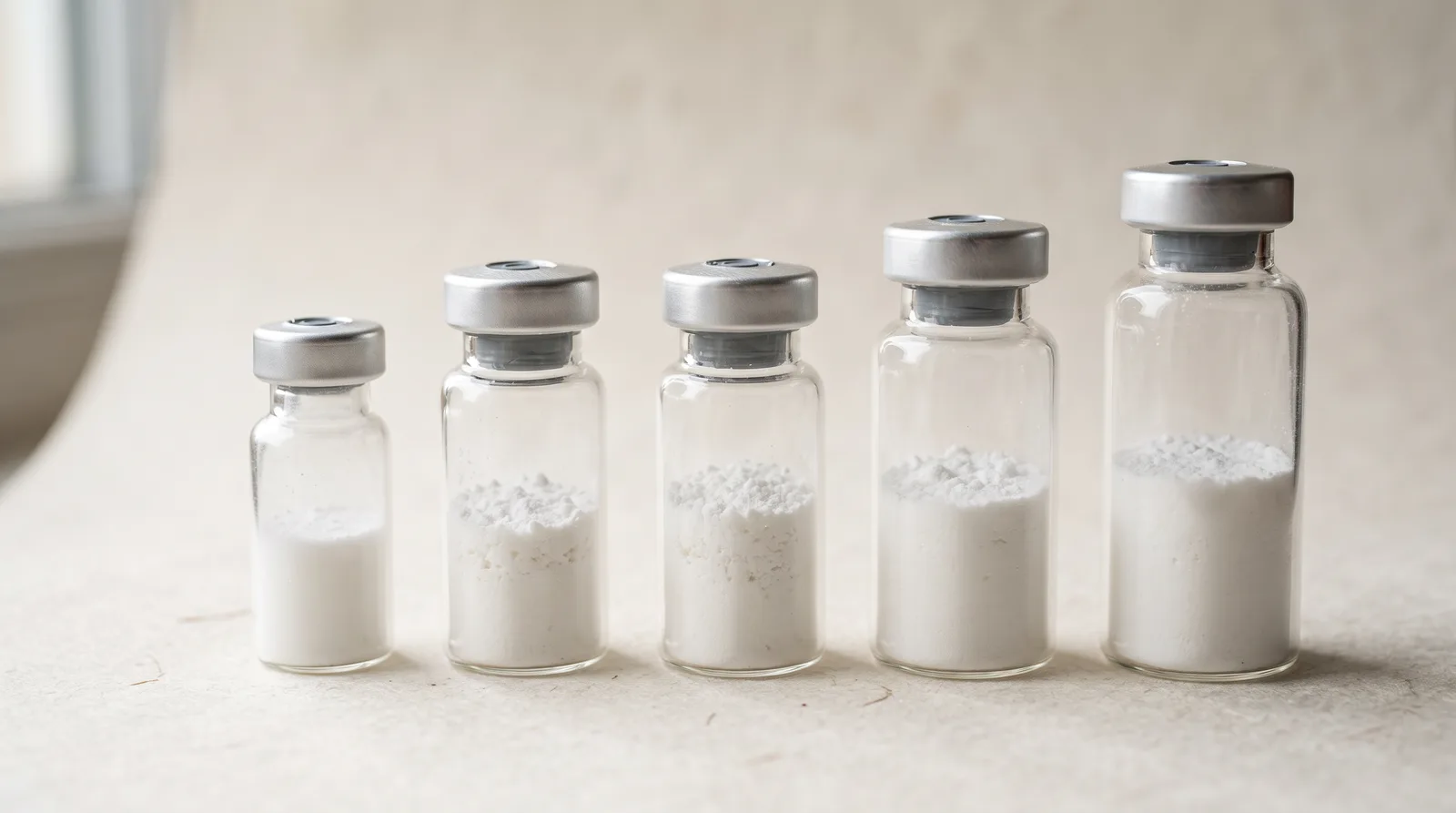
No. The label is the total peptide mass in the vial; the dose is what you draw out of it. At trial doses a 20 mg vial holds ten 2 mg doses or five 4 mg doses. Reading the label as a dose is the single most consequential mistake available here, and the market makes it easy: the most common claimed vial size is 20 mg, which is above every maintenance dose the trials tested except 12 mg.
The scale of the market makes the confusion common rather than rare. In the trailing year of r/Peptides, 2,613 of 16,878 posts name retatrutide, more than any other compound, and 774 of those wrestle with doses, units or reconstitution arithmetic in the post itself. In Janoshik's public archive, 74 of the 201 accumulated listings are retatrutide, with 20 mg the modal claimed size at 30 listings.
And if you spell it retratrutide, you are far from alone; the misspelling outranks the correct spelling in some search data. Spelling signals nothing about quality. The report ledger lists who has actually published a test, misspellings included.
listings in the accumulated Janoshik public archive name retatrutide, the most of any compound. 30 of them claim a 20 mg vial. Captured 30 August 2026.
Questions
Retatrutide dosage, asked directly.
What dose of retatrutide did the clinical trials use?+
The phase 2 obesity trial used 1, 4, 8 and 12 mg once weekly for 48 weeks, with the higher arms starting at 2 or 4 mg and stepping up every four weeks. The phase 3 TRIUMPH programme uses target doses of 4, 9 and 12 mg weekly, reached the same way. No dose is approved anywhere.
Is there an official retatrutide dose?+
No. Retatrutide has no approved product in any country, so there is no label to read a dose from. Eli Lilly plans to file for US approval in the first quarter of 2027. Until a label exists, every dosing number in circulation traces back to trial protocols or to forums.
Is a 20 mg retatrutide vial one dose?+
No. The label states the total peptide mass in the vial, not a dose. At the trial doses of 2 to 12 mg weekly, a 20 mg vial holds roughly 2 to 10 doses depending on where in the titration you are. The vial size and the dose are independent numbers.
What side effects did retatrutide cause in the trials?+
Mostly gastrointestinal: nausea, diarrhoea, vomiting and constipation, dose-related and mostly mild to moderate, concentrated during dose escalation. Starting at 2 mg instead of 4 mg reduced them. Heart rate increased in a dose-dependent way, peaking around 24 weeks and declining after.
Sources
Jastreboff et al., NEJM 2023: phase 2 trial // NCT04881760 // Lilly, July 2026: TRIUMPH-2 and TRIUMPH-3 topline // MechPeptides archive mirror
Published 29 August 2026. Forum figures are document counts over one trailing year of r/Peptides posts, computed 29 August 2026. Educational content; research compounds are not for human consumption.
Research use only
MechPeptides sells nothing. Retatrutide is an investigational compound with no approved product anywhere, it is not a dietary supplement, and nothing on this page is medical advice or a recommended protocol.
Trial figures describe pharmaceutical material given under medical supervision inside a monitored protocol. They do not describe gray-market vials, and this page cites them as the public record of what was studied, not as instructions.