Reconstitution and dose maths
GHK-Cu reconstitution calculator
A 50 mg vial with 5 mL of bacteriostatic water gives 10 mg/mL, so a 2 mg dose is 0.2 mL: 20 units on a U-100 insulin syringe. GHK-Cu vials are ten times heavier than most peptide vials, which turns the usual water advice on its head.
Updated 30 August 2026. Ledger figures captured 30 August 2026.
The arithmetic, shown
- 50 mg in the vial ÷ 5 mL of water = 10.00 mg/mL
- 2.000 mg per dose ÷ 10.00 mg/mL = 0.200 mL
- 0.200 mL × 100 = 20 units on a U-100 syringe
Your vial
Vial size (mg)
Bacteriostatic water added (mL)
What the calculator is doing
Milligrams in the vial, units on the barrel.
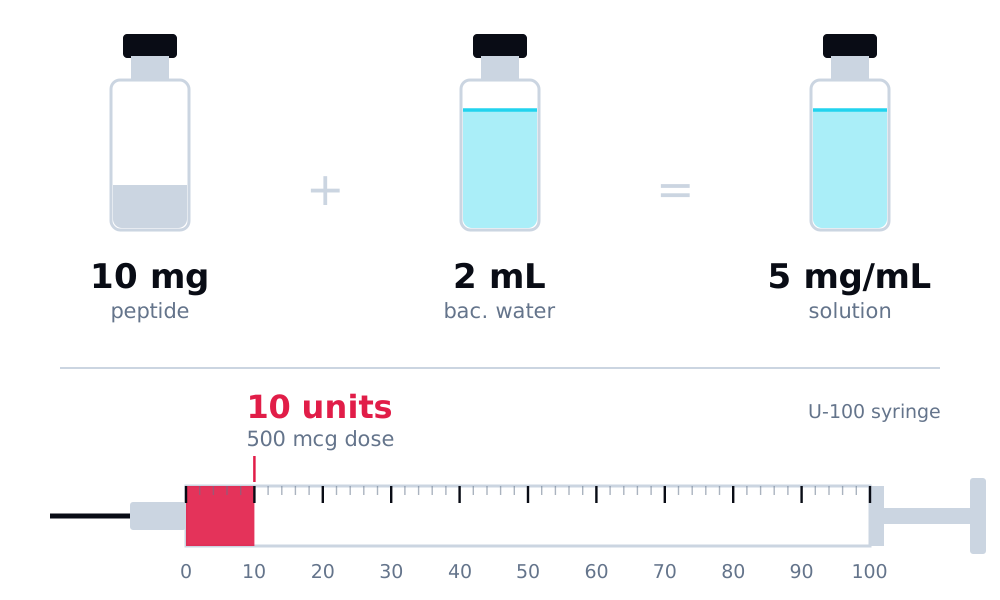
Common draws
The usual vials, worked out.
GHK-Cu circulates in 50 and 100 mg vials, so even generous water volumes leave high concentrations. The rows below show the same 2 mg dose at six reconstitutions: the dose never moves, but the draw runs from 8 to 40 units depending on the water.
| Vial | Water added | Concentration | Dose | Draw to | Doses in the vial |
|---|---|---|---|---|---|
| 50 mg | 2 mL | 25.00 mg/mL | 2 mg | 8.0 units | 25 |
| 50 mg | 5 mL | 10.00 mg/mL | 2 mg | 20 units | 25 |
| 50 mg | 10 mL | 5.00 mg/mL | 2 mg | 40 units | 25 |
| 100 mg | 5 mL | 20.00 mg/mL | 2 mg | 10 units | 50 |
| 100 mg | 10 mL | 10.00 mg/mL | 2 mg | 20 units | 50 |
| 100 mg | 10 mL | 10.00 mg/mL | 5 mg | 50 units | 20 |
Each row is the calculator's three steps in print: vial ÷ water = mg/mL, dose ÷ mg/mL = volume, volume × 100 = units on a U-100 syringe. Doses in the vial is the labelled mass divided by the dose, rounded down. A 10 mL reconstitution will not fit every vial; check the vial's actual capacity before committing to it.
Heavy vials
The risk is a draw you cannot read.
Most peptide dosing mistakes come from draws that are too big. GHK-Cu produces the opposite failure. Put the usual 2 mL into a 50 mg vial and you are at 25 mg/mL, where a 1 mg dose is 4 units: a hair's width of plunger travel, with any half-unit reading error worth 12% of the dose. The calculator flags every result under 3 units, and with this compound you will actually see that warning.
Water is the lever. The vial sizes here come with water options up to 10 mL because that is what the mass demands; splitting the reconstitution across a larger vial, or accepting several syringe-loads of water into the original one, is routine for 100 mg. One physical note, since first-timers regularly ask: GHK-Cu is a copper complex and dissolves blue. The colour says copper is present, and nothing else; what the vial actually contains is a question for a lab report, not for shade.
The public record
GHK-Cu in the open archive.
of the 201 tests in Janoshik's public archive name GHK-Cu in the listing. Captured 30 August 2026.
Two of the six claim 100 mg vials, and the naming shows the wholesale channel at work: listings like CU50 are catalogue codes for GHK-Cu 50 mg, and two are KLOW blends where GHK-Cu shares the vial with TB-500, BPC-157 and KPV. For a blend, the arithmetic runs per component: each keeps its own concentration and one draw takes all of them in proportion.
Six public listings is a thin record. If your vial came with a report, verify it against the lab rather than taking the PDF at face value, and see the report ledger for what a public listing does and does not prove.
Questions
GHK-Cu dose maths, asked directly.
How many units is 2 mg of GHK-Cu?+
At 10 mg/mL, which is a 50 mg vial reconstituted with 5 mL of bacteriostatic water, 2 mg is 0.2 mL: 20 units on a U-100 insulin syringe. At 25 mg/mL, the same 50 mg vial with only 2 mL, it shrinks to 8 units.
How much bacteriostatic water should I add to a 50 mg GHK-Cu vial?+
More than for most peptides. GHK-Cu vials carry ten times the mass of a typical 5 mg peptide vial, so small water volumes produce very high concentrations and draws too small to read. 5 mL gives 10 mg/mL and puts milligram doses in the readable 10 to 50 unit range; 10 mL halves the concentration again.
Why is my GHK-Cu draw so small?+
Because the concentration is high. At 25 mg/mL a 1 mg dose is 4 units, which is at the edge of what a U-100 syringe can measure repeatably. The fix is at reconstitution time: more water lowers the concentration and enlarges the draw without changing the dose.
Is it normal that GHK-Cu solution is blue?+
Yes. GHK-Cu is a copper complex and dissolves to a blue solution. The colour tells you copper is present; it is not a measure of purity or dose in either direction. What a vial actually contains is a testing question, answered by a lab report, not by shade.
Other compounds
Same arithmetic, different defaults.
Tirzepatide calculator
Multi-dose vials against single-dose pens, and the overdraw mistake that follows.
Retatrutide calculator
The most tested compound in the public archive. Vials 5 to 30 mg, doses in whole milligrams.
Semaglutide calculator
The smallest doses of the GLP-1s: 0.25 to 2.4 mg, where a draw can shrink below readability.
BPC-157 calculator
Dosed in micrograms, which is exactly where the thousand-fold unit mistake lives.
MOTS-c calculator
One vial size dominates the public record, and one public assay shows why labels are claims.
All compounds
The same calculator with the full compound picker, TB-500 included.
Research use only
MechPeptides sells nothing. GHK-Cu is named on this page so the arithmetic has a label on it. Injectable GHK-Cu is not approved by the FDA for human or veterinary use, it is not a dietary supplement, and nothing on this site is medical advice or a recommended protocol.
The calculator performs arithmetic on numbers you enter. It converts a vial mass and a diluent volume into a concentration, then into a volume and a U-100 syringe reading. It does not know your compound, it does not recommend a dose, and its slider bounds are display ranges rather than guidance. Confirm every calculation independently before acting on it.