Fake Janoshik reports
The peptide market's trust runs through one lab's PDFs, so faking those PDFs is the cheapest scam available. The good news: every fake in circulation fails the same thirty-second check, because the one thing a forger cannot edit is Janoshik's own database. Here is how the fakes are made, and how each one gets caught.
How fake reports are made
Four methods cover essentially everything in circulation.
A report built from scratch on the template of a real one. Crude but common, because most buyers never check. Caught by: the task number and key return nothing on janoshik.com/verification. Dead on the first check.
The dangerous one. A genuine report, real task number and key, with the purity, quantity, compound, or client name edited in the PDF. It survives the first check because the key verifies. Caught by: comparing the verified database copy field by field against the PDF you were shown. The database shows the original values; any mismatch is the edit.
A real, verifiable report for someone else's batch, passed off as the vendor's own. One buyer in a community thread ran a reseller's task number and key and found the original client: the manufacturer the reseller was quietly buying from, at prices about 90% lower. Caught by: checking whose name is on the verified report and searching the task number in the public archive.
A genuine report for a genuine batch, reused for every batch since. Testing is batch-specific; a January report says nothing about August stock. Caught by: the test date. If the report predates the batch you are being sold, it is marketing, not evidence.
Why do vendors redact the task number and key?
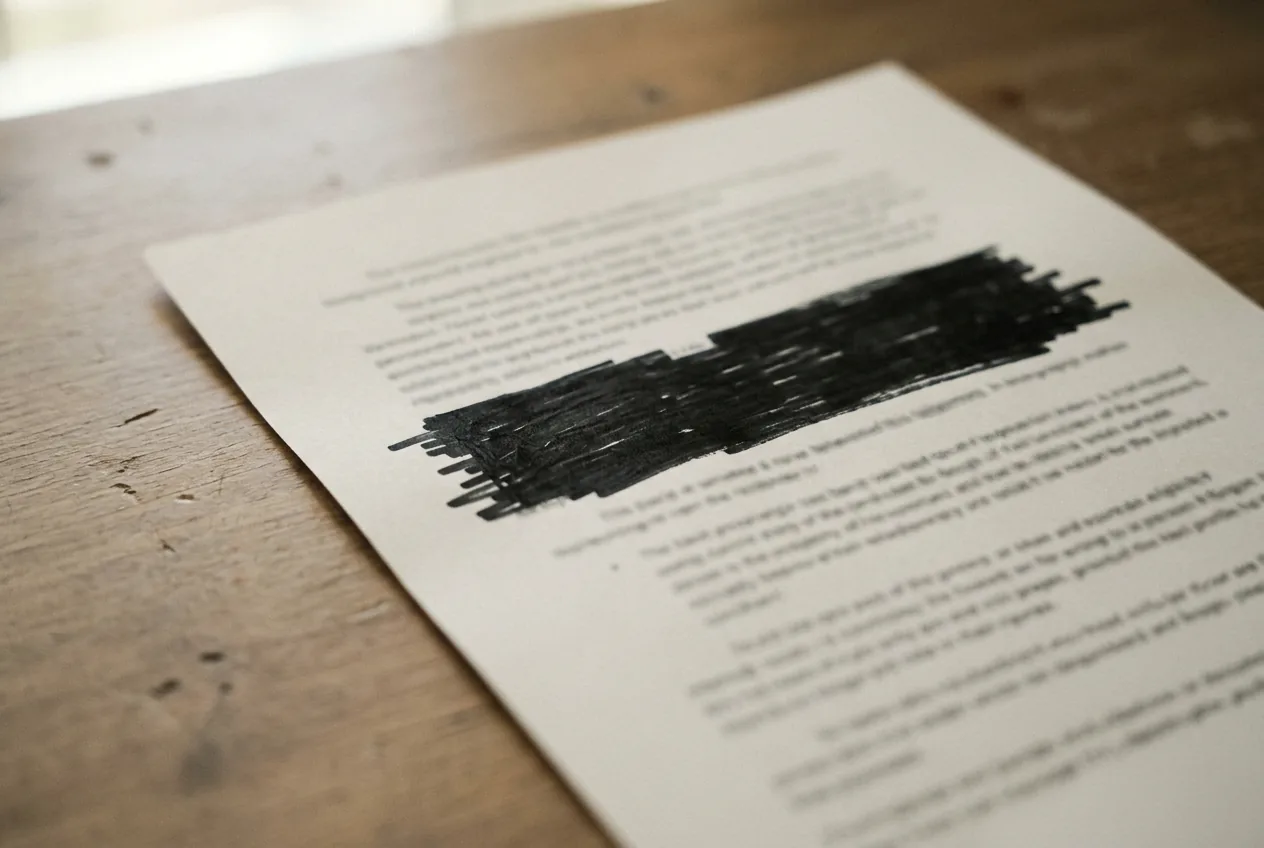
The pattern buyers actually run into is not an obvious forgery. It is a real-looking report with the client name, manufacturer, task number, or unique key blacked out, usually explained as "privacy" or "protecting our sources". This comes up constantly in community threads, and the community's reading is blunt: a r/PeptidePathways thread on exactly this question concluded that a vendor who paid hundreds of dollars for a test would be showing it off, not hiding the parts that make it checkable.
There are two motives, and neither is good for you. Either the report is not theirs (a fake or a borrow), or the reseller is hiding the upstream manufacturer's name so you cannot buy from the source directly. The second is not fraud, but you are paying a markup specifically engineered to survive on your inability to check. In both cases the operational conclusion is the same: a report you cannot verify carries zero information, whatever it looks like.
Hundreds of vendors publish their reports voluntarily in Janoshik's public archive, identifiers included. Our COA ledger accumulates 201 of them. Redaction is a choice made against that baseline.
The thirty-second check that catches all four
-
Verify the key at the lab
Kills the invented PDF instantly. No match, no report, no purchase.
-
Compare the verified copy field by field
Kills the edited report. Compound, mg, purity, client, date: the database copy is the original, the PDF is the claim.
-
Check the name and the archive
Kills the borrowed report. If the verified client is not the vendor in front of you, you found a borrow, and possibly their supplier.
-
Sanity-check the date
Kills the recycled report. Batch-specific evidence has a batch-specific date.
Format checks plus direct links to the official verification form and the public archive.
OpenWhat to do if you caught a fake
Do not buy, and do not argue with the vendor; you have nothing to gain from the conversation. If the community where you found the vendor has a discussion thread, post the specifics: the task number, what the verified copy shows, and what the vendor's PDF claimed. Concrete mismatches are what protect the next buyer; vague accusations protect no one.
If you already bought and the report was fake, treat the product as untested. The practical options are to discard it or to test the vial yourself; US buyers can use a domestic lab and skip customs entirely. Our lab comparison covers who tests what and for how much. Janoshik verifies its own reports' authenticity, but it does not police how vendors use them; the checking layer is you.
Fake report FAQ
Can a Janoshik report be faked?+
The PDF can be faked in minutes; the verification cannot. A forger can edit every pixel of the document but cannot change what Janoshik's database returns for a task number and unique key. That asymmetry is the entire defense, which is why a report without checkable identifiers should be treated as no report at all.
Is a screenshot of a report proof of testing?+
No. A screenshot proves someone had an image. Proof is a task number and unique key that verify at the lab and describe the product you are buying, batch and date included. Low-resolution screenshots with cropped identifiers are the standard costume of invented, edited, and borrowed reports alike.
The key verifies. Am I safe?+
Not yet. A verifying key only rules out the invented PDF. The edited, borrowed, and recycled variants all carry keys that verify; they are caught by the field comparison, the client name, and the date. Run the full four-step procedure, not just step one.
Why would an honest vendor redact anything?+
The defensible case is a reseller hiding its upstream manufacturer to protect its margin. That is a business decision, not fraud, but it converts the report from evidence into decoration, and it tells you the price includes a markup that depends on you not checking. Vendors who want the report to function as proof publish it whole; hundreds do.
Sources
janoshik.com/verification // public.janoshik.com // r/PeptidePathways on redacted reports
Published 2026-08-28. MechPeptides is not affiliated with Janoshik Analytical. Educational content; research compounds are not for human consumption.