Reconstitution and dose maths
BPC-157 dose calculator
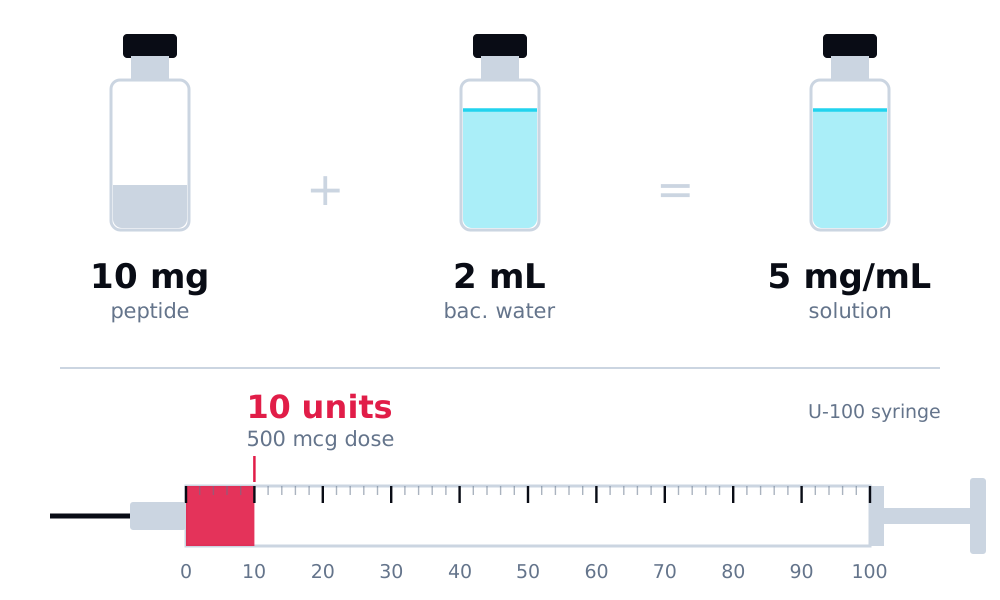
A 5 mg vial with 2 mL of bacteriostatic water gives 2.5 mg/mL, so a 250 mcg dose is 0.1 mL: 10 units on a U-100 insulin syringe. BPC-157 is dosed in micrograms, and this page keeps the whole calculation in micrograms so nothing gets converted by hand.
Updated 30 August 2026. Ledger figures captured 30 August 2026.
The arithmetic, shown
- 5 mg in the vial ÷ 2 mL of water = 2.50 mg/mL
- 0.250 mg per dose ÷ 2.50 mg/mL = 0.100 mL
- 0.100 mL × 100 = 10 units on a U-100 syringe
Your vial
Vial size (mg)
Bacteriostatic water added (mL)
What the calculator is doing
Milligrams in the vial, units on the barrel.
Common draws
The usual vials, worked out.
BPC-157 ships in 5 and 10 mg vials and is dosed in hundreds of micrograms, so one vial holds ten to forty doses. That makes the draws small: with the common reconstitutions the answer sits between 5 and 20 units on a U-100 syringe.
| Vial | Water added | Concentration | Dose | Draw to | Doses in the vial |
|---|---|---|---|---|---|
| 5 mg | 2 mL | 2.50 mg/mL | 250 mcg | 10 units | 20 |
| 5 mg | 2 mL | 2.50 mg/mL | 500 mcg | 20 units | 10 |
| 5 mg | 1 mL | 5.00 mg/mL | 500 mcg | 10 units | 10 |
| 10 mg | 2 mL | 5.00 mg/mL | 250 mcg | 5.0 units | 40 |
| 10 mg | 2 mL | 5.00 mg/mL | 500 mcg | 10 units | 20 |
| 10 mg | 1 mL | 10.00 mg/mL | 500 mcg | 5.0 units | 20 |
Each row is the calculator's three steps in print: vial ÷ water = mg/mL, dose ÷ mg/mL = volume, volume × 100 = units on a U-100 syringe. Doses in the vial is the labelled mass divided by the dose, rounded down.
Units of mass
The thousand-fold mistake lives here.
BPC-157 is the compound where microgram and milligram meet, and the arithmetic punishes anyone who mixes them. 250 mcg is 0.25 mg. Type 250 into a calculator that expects milligrams and you have asked for a thousand times the intended dose; the answer comes back as an absurd volume, and an absurd volume is easy to shrug at when you are new and every number looks arbitrary. The dose slider on this page works in micrograms for exactly that reason.
A useful cross-check that costs nothing: at 250 mcg from a 5 mg vial, the doses readout should say 20. If it says 2, or 200, a unit slipped somewhere. The vial count is the easiest number on the page to sanity-check against the label in your hand.
The public record
Mostly tested as a blend.
of the 201 tests in Janoshik's public archive name BPC-157 in the listing. Captured 30 August 2026.
Most of the seven are not straight BPC-157. They are blends: BPC-157 with TB-500 in one vial, and multi-part mixes sold under names like KLOW. Blends change the maths in one specific way, so it is worth being precise: each component keeps its own concentration, and one draw carries all of them in proportion. A 10 mg plus 10 mg blend in 2 mL puts each component at 5 mg/mL; drawing 5 units takes 250 mcg of both at once.
To work a blend out with this calculator, run it once per component with that component's labelled mass; the full blend arithmetic, tables included, is on the BPC-157 and TB-500 page. And if the blend came with a lab report, verify it; the report ledger shows how rarely BPC-157 sellers publish at all.
Questions
BPC-157 dose maths, asked directly.
How many units is 250 mcg of BPC-157?+
At 2.5 mg/mL, which is a 5 mg vial reconstituted with 2 mL of bacteriostatic water, 250 mcg is 0.1 mL: 10 units on a U-100 insulin syringe. At 5 mg/mL, from a 10 mg vial with the same water, it is 5 units.
Is 250 mcg the same as 0.25 mg?+
Yes. 1 mg is 1,000 mcg, so 250 mcg equals 0.25 mg. The dangerous version of this question is typing 250 into a field that expects milligrams, which asks for a thousand times the intended dose. This calculator's dose slider works in micrograms for BPC-157, so the number you set is the number you meant.
How many doses are in a 5 mg vial of BPC-157?+
At 250 mcg per dose, 20 doses. At 500 mcg, 10. Divide the labelled vial mass by the dose and round down; the calculator shows this in the doses-per-vial readout.
How do I calculate a dose from a BPC-157 and TB-500 blend vial?+
Run the calculation once per component, using that component's labelled mass. In a 10 mg BPC-157 plus 10 mg TB-500 blend with 2 mL of water, each component sits at 5 mg/mL, so a 5-unit draw carries 250 mcg of each at the same time. You cannot dose one component of a blend without drawing the others.
Other compounds
Same arithmetic, different defaults.
Tirzepatide calculator
Multi-dose vials against single-dose pens, and the overdraw mistake that follows.
Retatrutide calculator
The most tested compound in the public archive. Vials 5 to 30 mg, doses in whole milligrams.
Semaglutide calculator
The smallest doses of the GLP-1s: 0.25 to 2.4 mg, where a draw can shrink below readability.
GHK-Cu calculator
50 and 100 mg vials flip the usual problem: the risk is a draw too small to measure.
MOTS-c calculator
One vial size dominates the public record, and one public assay shows why labels are claims.
All compounds
The same calculator with the full compound picker, TB-500 included.
Research use only
MechPeptides sells nothing. BPC-157 is named on this page so the arithmetic has a label on it. It is not approved by the FDA for human or veterinary use, it is not a dietary supplement, and nothing on this site is medical advice or a recommended protocol.
The calculator performs arithmetic on numbers you enter. It converts a vial mass and a diluent volume into a concentration, then into a volume and a U-100 syringe reading. It does not know your compound, it does not recommend a dose, and its slider bounds are display ranges rather than guidance. Confirm every calculation independently before acting on it.